The Team
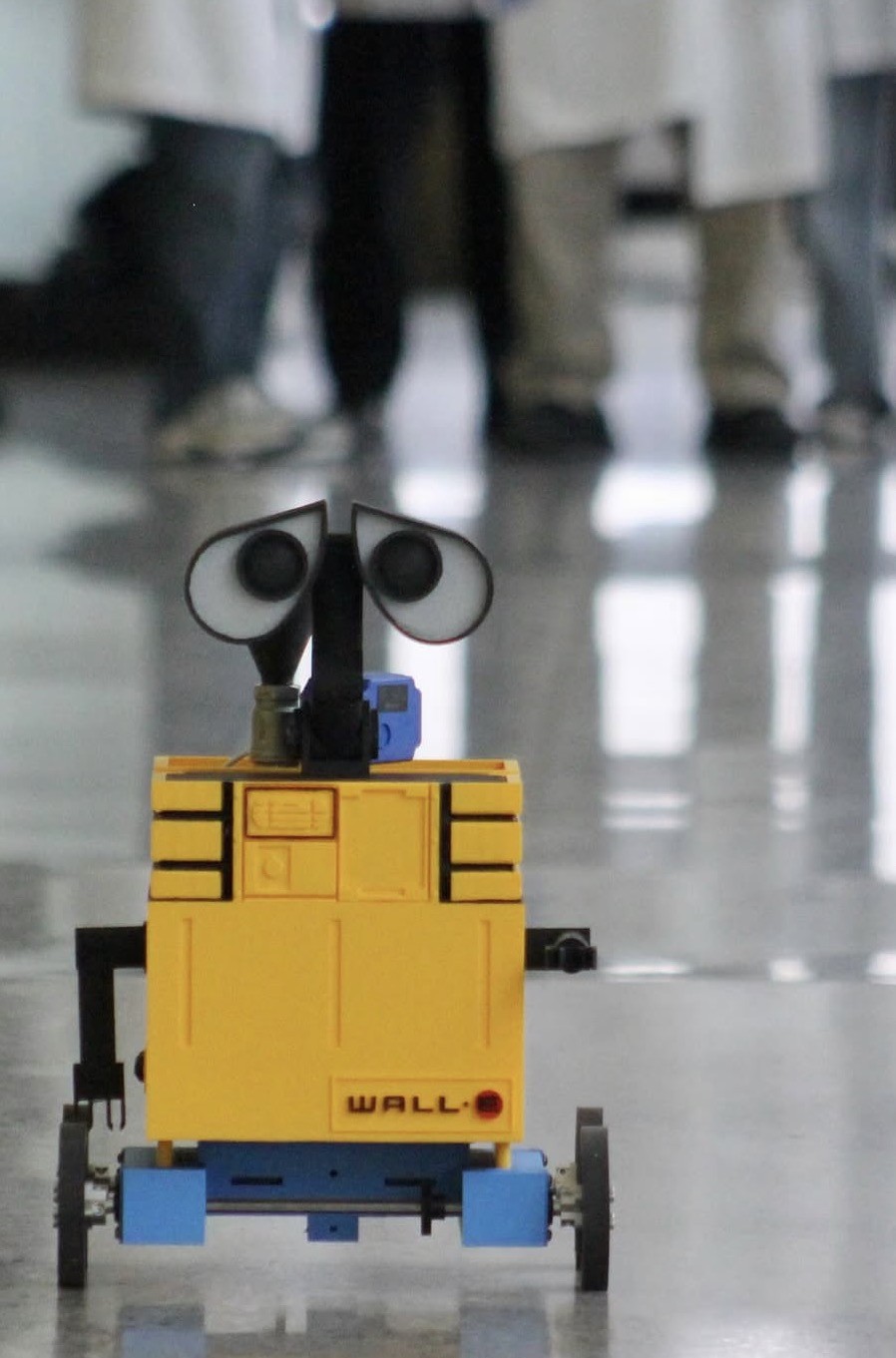
Chem-E Car UBC is a student engineering design team at the University of British Columbia that builds small, chemically powered vehicles. The challenge is to design a car that is driven entirely by chemical reactions and stops accurately at a target distance, which requires close integration of mechanical, electrical, and chemical subsystems. During my time on the team, our car won first place at the Canadian Regional Chem-E-Car Competition, received the award for best design, and advanced to the Canada/US competition in Boston.
As a member of the mechanical engineering team, I focused on mechanical design and prototyping in SolidWorks, iterating on my designs through multiple 3D-printed prototypes and refining them for manufacturability and performance.
My Contributions
Drivetrain and Chassis
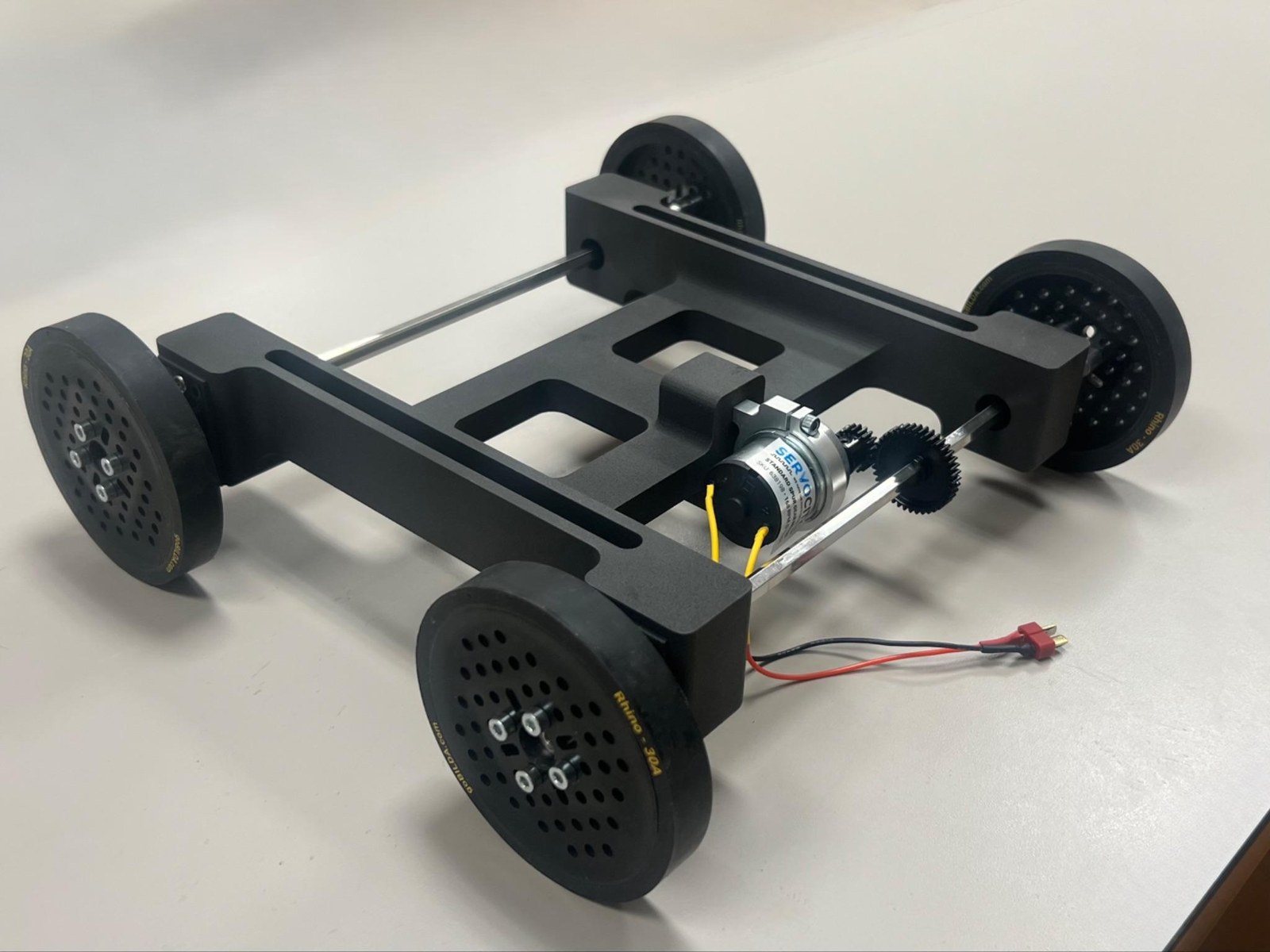
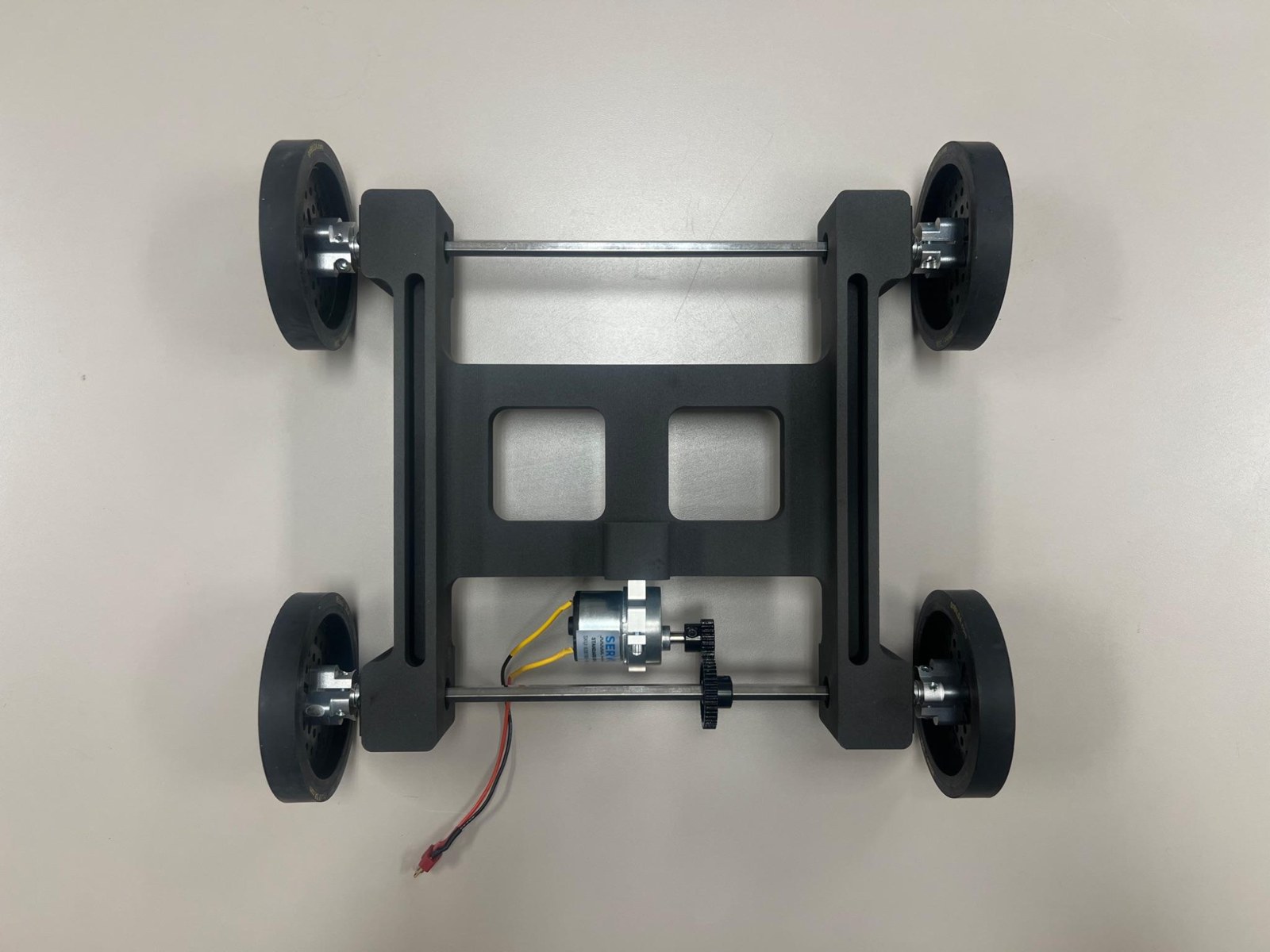
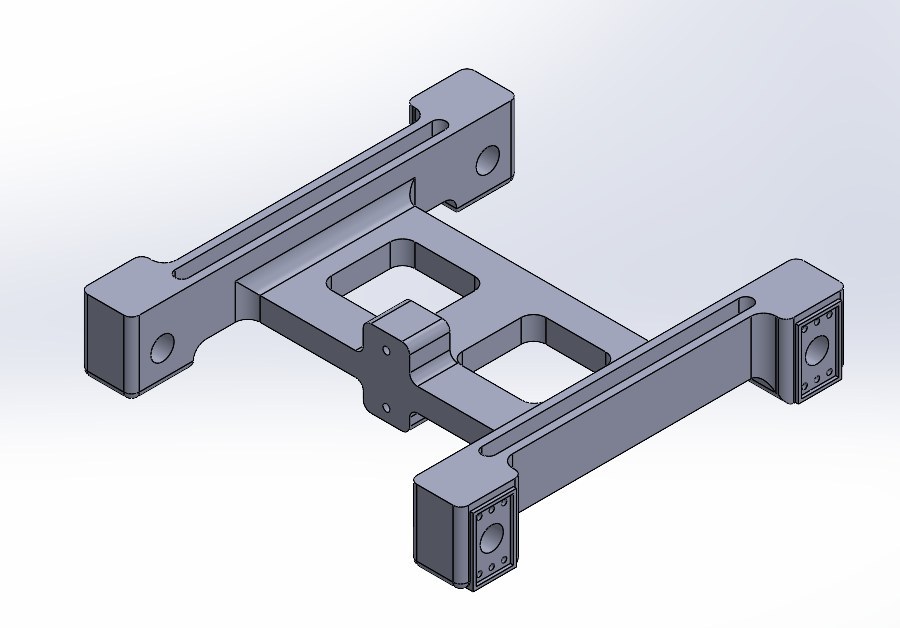
I designed the car’s drivetrain and chassis in SolidWorks, including the motor, gear, and shaft system. One of the main challenges was keeping the design compact and lightweight while remaining durable. To address this, I optimized part geometry to minimize material use while maintaining strength, selecting wall thicknesses and then printing and load testing the parts to confirm they held up in use. We ultimately switched from PLA to SLS nylon for key components to achieve greater durability under load.
Early prototypes also suffered from misaligned shafts, which increased friction and reduced efficiency. I resolved this by redesigning the drivetrain in SolidWorks as a single printed unit and incorporating pillow blocks to hold the ball bearings, ensuring consistent shaft alignment and smoother operation. Because the car’s tight spaces made it difficult to fit the mechanical and electrical subsystems together, I also incorporated slots and alignment features into the chassis, which simplified assembly and made integration more reliable.
Containment Systems
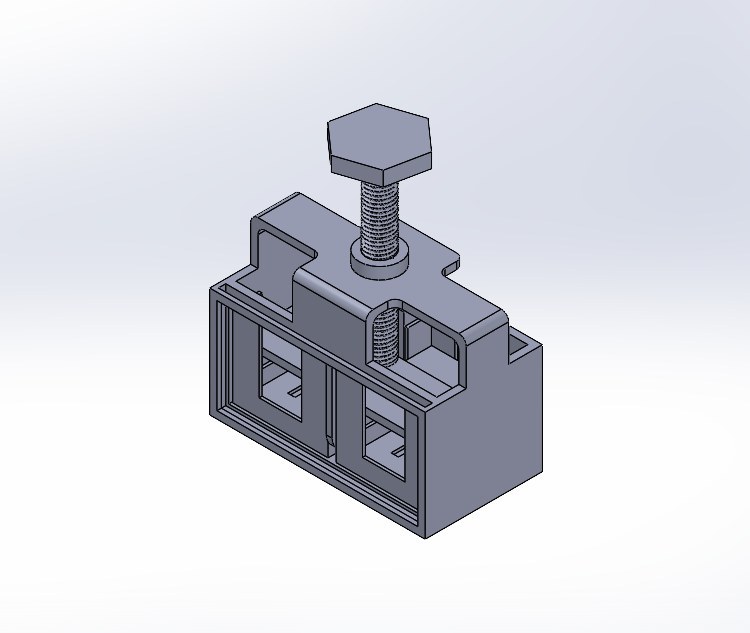
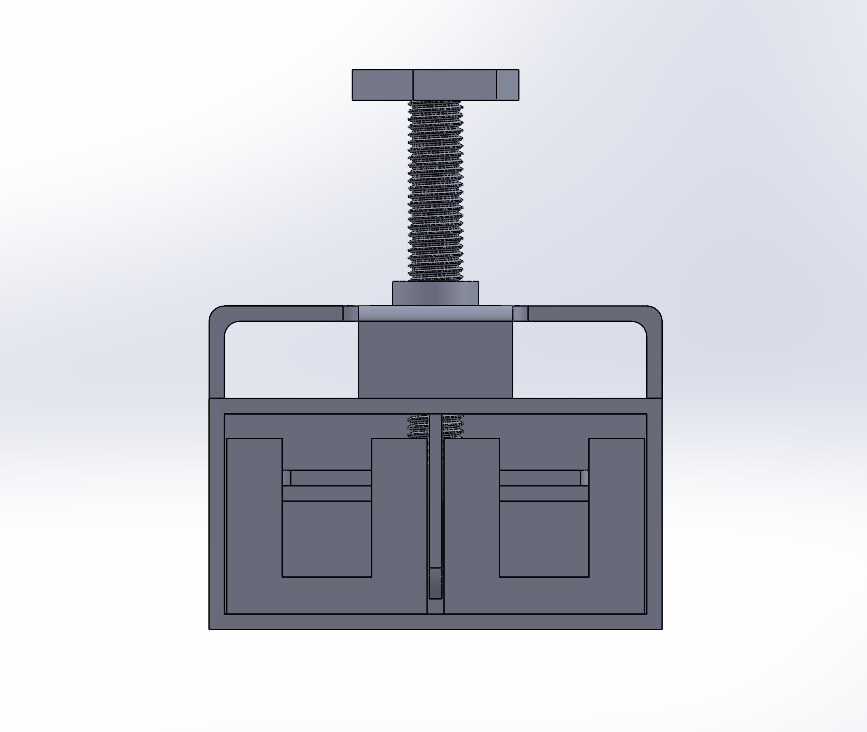
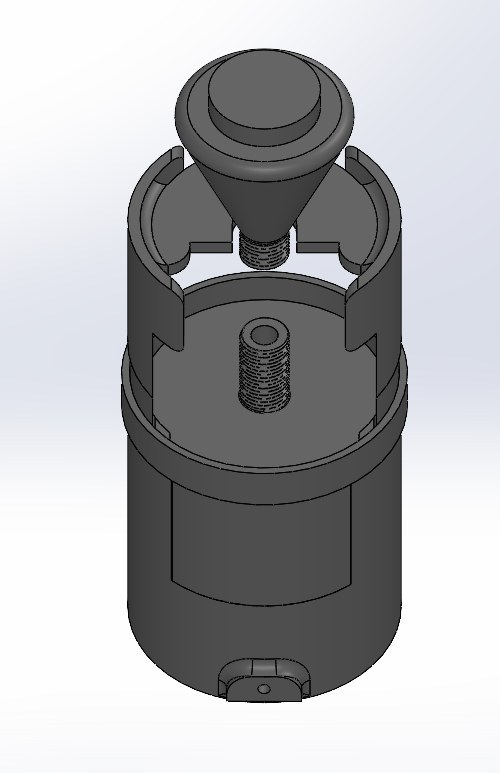
I designed the containment systems for the chemical reaction and battery chambers in SolidWorks, which needed to hold their contents securely, assemble easily, and connect reliably to the vehicle’s power system. The initial designs made it difficult to access the interior containers, light sensors, and wiring, so I revised the SolidWorks models to provide easier access and dedicated mounting points, which improved usability and reliability during testing.
Visual Design
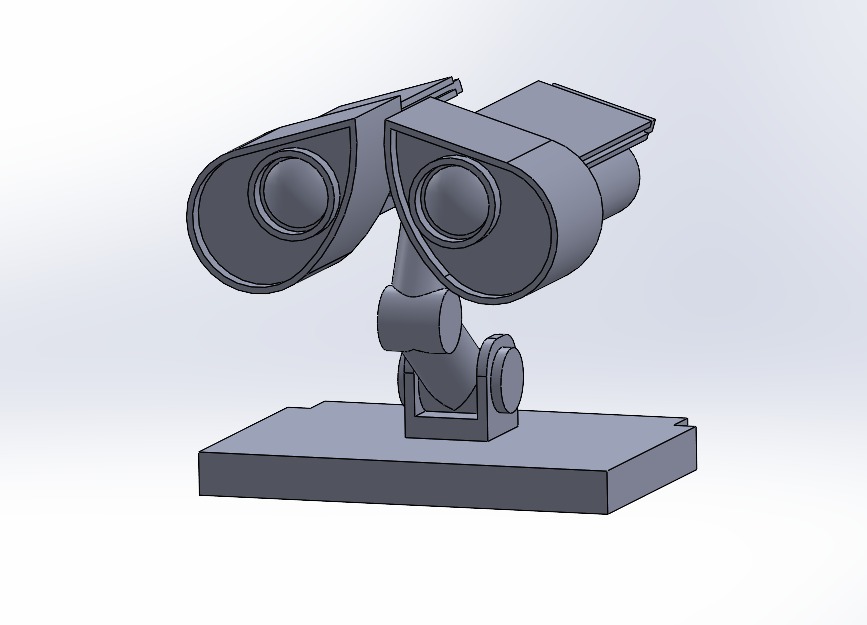
The competition also judges each car on its visual design, and our team chose to design the car to resemble WALL-E. I was responsible for the head: using images from the film as inspiration, I designed my own model of it in SolidWorks and then 3D printed it.