The Team
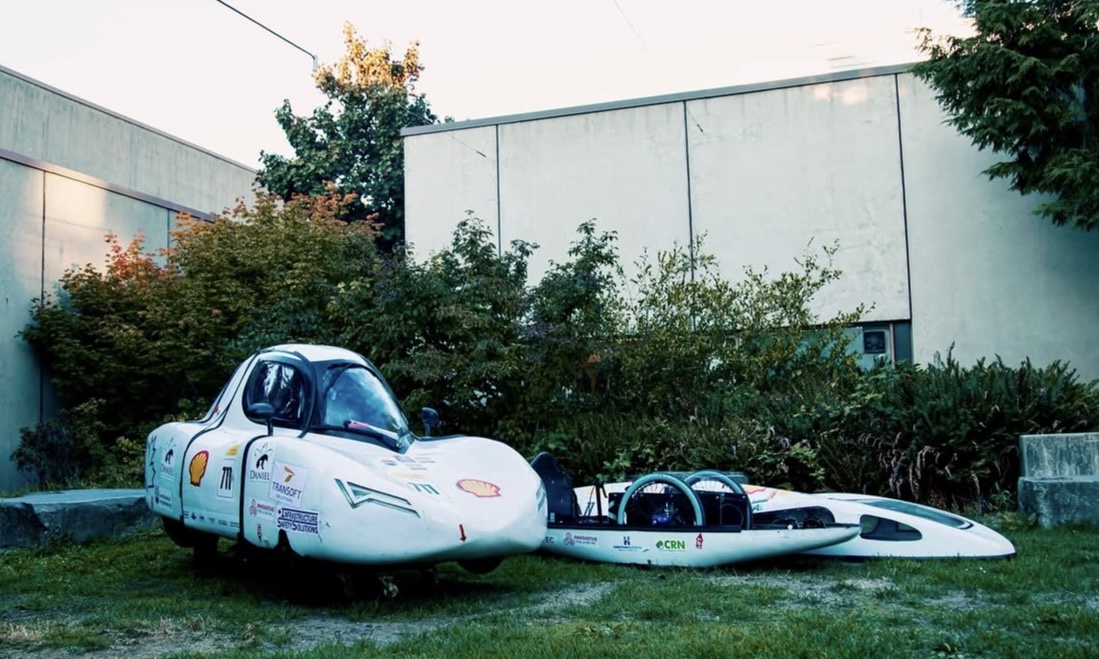
UBC Supermileage is a student engineering design team at the University of British Columbia that works to develop some of the most efficient vehicles ever built. With more than 70 members, the team designs, builds, and optimizes vehicles with gasoline, battery-electric, and hydrogen fuel cell powertrains. Each year, the team competes at the Shell Eco-marathon at the Indianapolis Motor Speedway, racing against other schools in a contest of efficiency, with separate categories for each powertrain type and for prototype and larger urban vehicles. One of the team’s gasoline vehicles once held the world record for the most efficient gasoline-powered vehicle, a title it kept for five consecutive years.
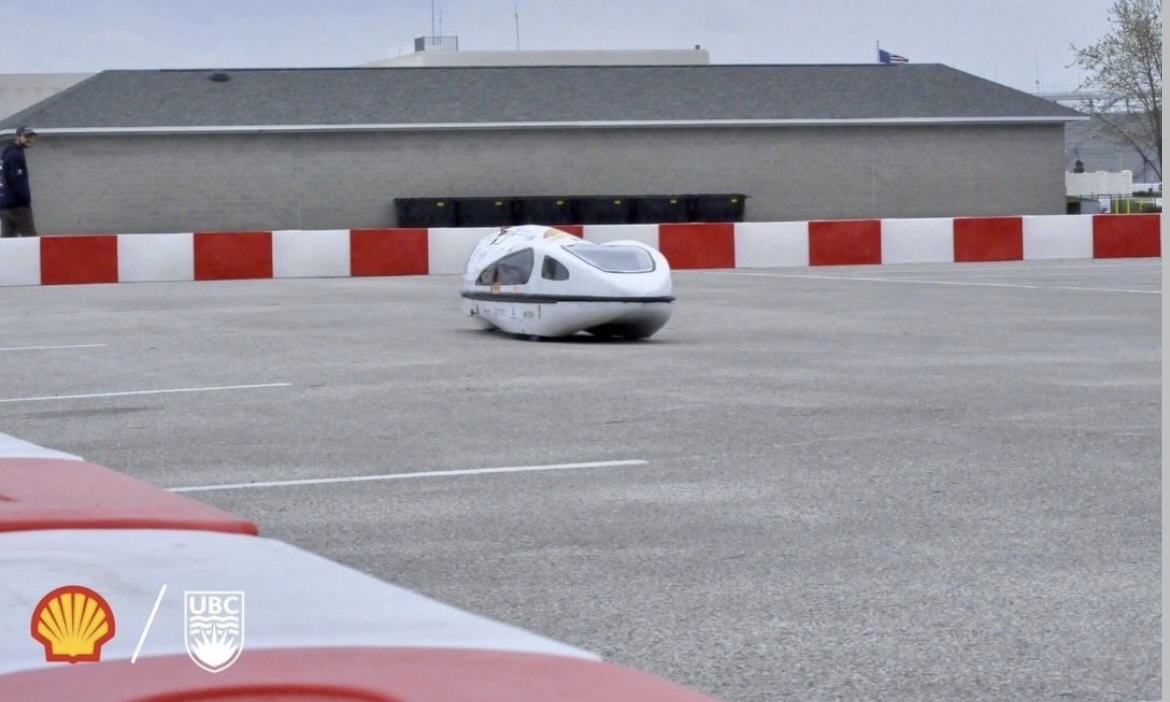
As a member of the powertrain group, I contributed to projects across the engine and drivetrain divisions.
My Contributions
Fuel Cell Prototype Drivetrain Redesign
During the 2025 Shell Eco-marathon, the chain on the team’s Fuel Cell Prototype (FCP) repeatedly fell off its sprocket. Working with two other team members, I helped redesign the vehicle’s drivetrain with two main goals: keeping the drive reliably tensioned under the vibration of driving, and making it possible to change the gear ratio quickly between runs, a process that previously took upwards of 20 minutes.
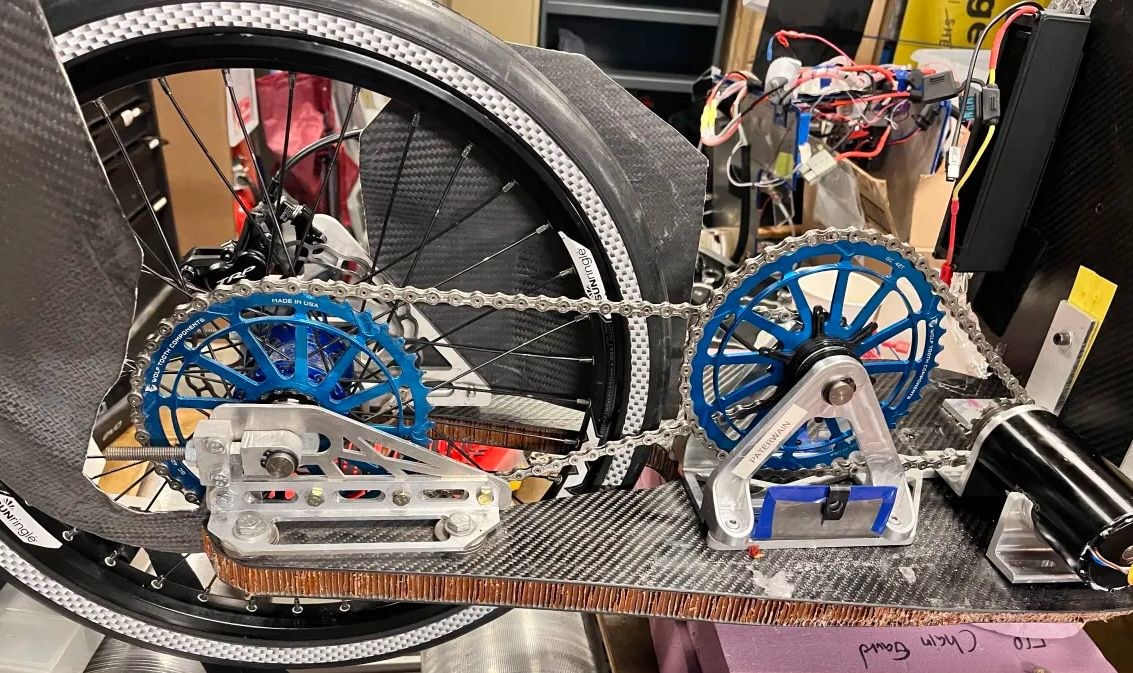
We began by studying the existing system to identify the causes of its failures, including securing bolts that loosened under vibration and a tensioning system with limited adjustability. We then defined requirements for cost, weight, manufacturing time, and gear ratio range. From there, we generated nine concepts, ranging from belt drives and planetary gearboxes to a bicycle-style derailleur, and evaluated them by weighting our criteria with an analytic hierarchy process and scoring each concept in a weighted decision matrix. After further research into the top-scoring options, the team selected a final design that pairs a planetary gearbox with a belt drive to the wheel, eliminating the problematic chain mount and allowing the gear ratio to be changed by swapping the drive pulley.
ECU Tuning, Testing, and Wiring
I worked with the engine team on tuning and testing the engine control unit (ECU) for the gasoline engine. With a laptop connected to the ECU, we ran the engine and monitored live sensor data in the tuning software to evaluate its performance. I also used a timing light to verify the ignition timing. The light flashes each time the spark plug fires, making a reference mark on the rotating flywheel appear stationary, which allowed us to confirm that the spark occurred at the correct point in the engine cycle. Alongside this work, I helped with the team’s wiring, cutting and crimping wires and organizing cable runs with self-wrapping split braided sleeving.
PCB Enclosures
I designed protective enclosures for several of the vehicle’s printed circuit boards (PCBs) in CAD and 3D printed them. I then had clear acrylic covers made for the enclosures and installed them on the vehicle.
Cable-Actuated Braking System Revision
The previous braking system was not working reliably, as the brake cable could not slide far enough to actuate the brake. Through hands-on inspection of the system, a teammate and I traced the problem to the cable’s routing, which passed through a sharp bend on its way to the hand brake. We developed a solution that relocated the hand brake and rerouted the cable along a smoother path to reduce friction, and then modelled the new handle mount and cable routing together in CAD.