Overview
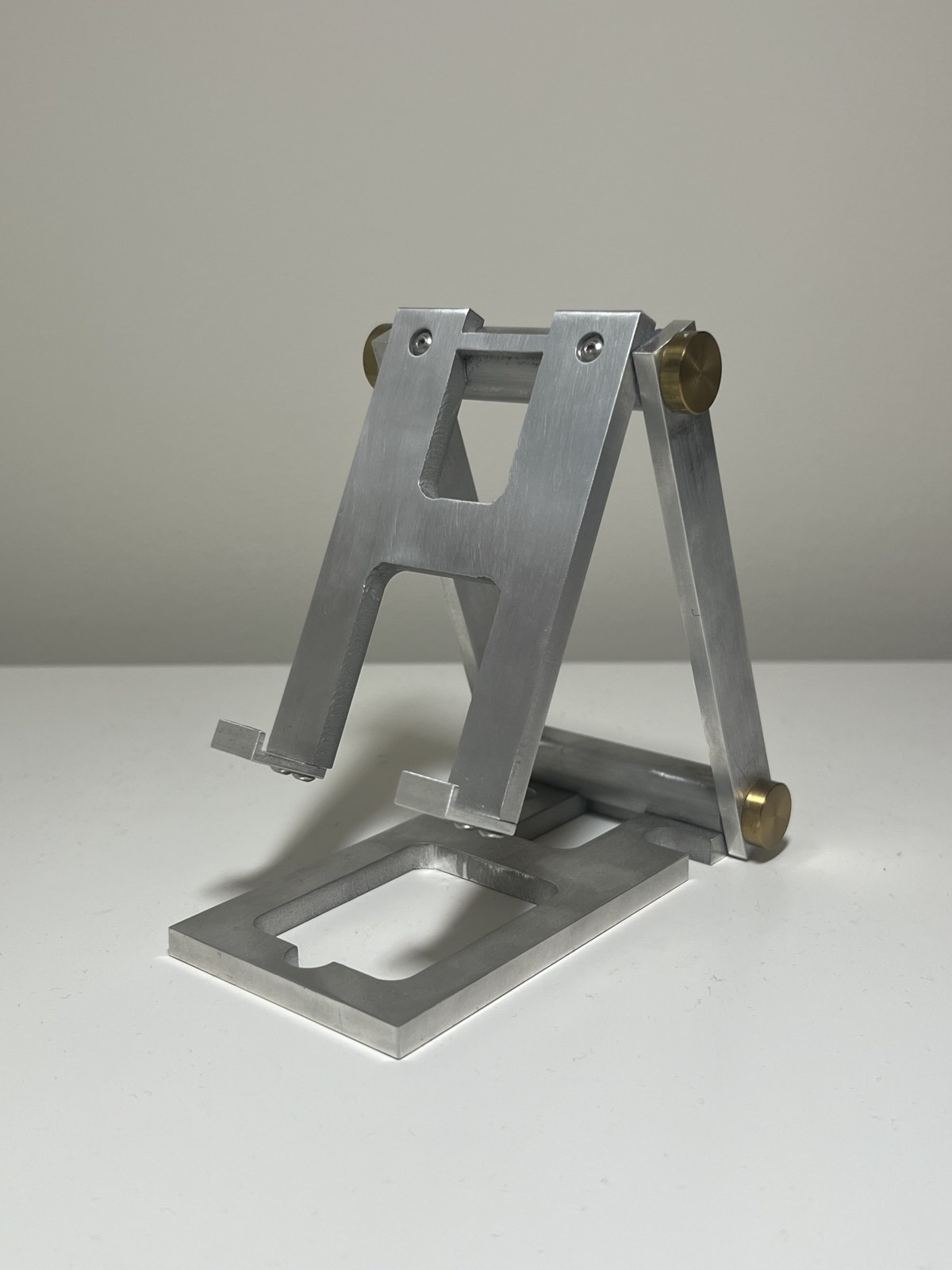
I built this adjustable phone stand while completing my machine shop training certification. I machined every part myself from aluminum and brass stock. Along the way, I learned to set up and fixture work on each machine, choose tools and cutting parameters for each material, and bring parts to their final dimensions.
Process
- Waterjet cutter: I started by cutting the profiles of the flat aluminum parts, including the frame and base, from plate stock. Each part was left slightly oversized so the final dimensions could be machined to tolerance afterward.
- Mill: Most of the stand’s features were cut on the mill. I squared up the waterjet-cut parts and brought each edge to its final dimension. I then cut the curved groove with a ball-nose end mill and added the rounded edges and fillets with a corner-rounding end mill. I also drilled the mounting and pivot holes, machined the small hooks that hold the phone in place, and milled wrench flats onto the brass shafts and nuts.
- Bench grinder: Before using the lathe, I ground my own lathe cutting tools from steel blanks. I made one for aluminum, with an added facet to help clear the long chips it produces, and one with a different geometry suited to brass, which breaks into short chips.
- Lathe: Using those tools, I turned the brass pivot shafts and nuts that hold the stand together. I also bored out aluminum round bar to make the sleeves the shafts pass through, then drilled and tapped the small holes in each sleeve.
- Assembly: I fitted the parts together with nylon washers at each joint, which keeps the aluminum and brass from rubbing directly against each other. This also lets the brass nuts be tightened or loosened to set how stiffly the stand pivots.